Category: Book Reviews

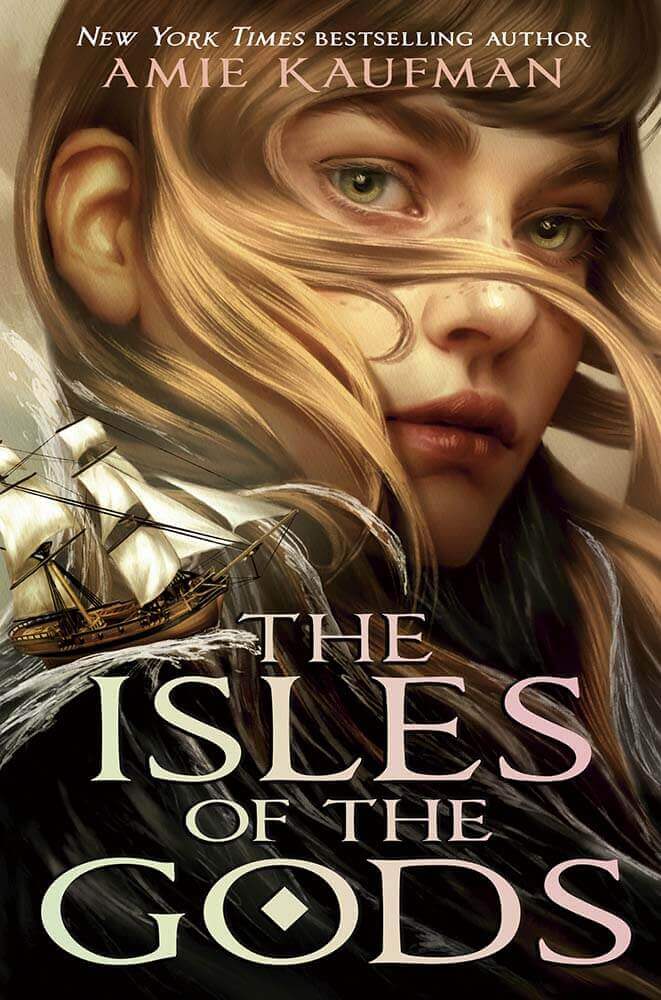
  • Isle of the Gods ~ Review


    Isle of the Gods ~ Review

    I first heard about this on the Pub Dates podcast, and since hearing about the way that Amie Kaufman brought together ideas, I’ve been desperate to read it.

    Amie never disappoints!

    Gangsters, sleeping gods and tall ships combine into a thrilling story.

  • Romantasy ~ Just say no!

    How often does this happen to you? You are immersed in a new world, you love the characters you’ve found there and you can’t wait to find out how they will get out of their current predicament and then you spot ‘it’ lumbering down the road towards you and you really wish ‘it’ would veer off in another direction. You try to ignore ‘it’, you hope ‘it’ won’t happen, or, at least, if ‘it’ does that ‘it’ will be over soon, but you turn the page and then ‘it’ hits you…

    POW!

    …ten pages lingering on the first kiss, five pages of breathless summary about how marvellous the male protagonist’s body is, another five pages describing how much the male protagonist is affected by the female protagonist’s body, four pages describing how much the heroine enjoys the sex, another page or two describing the first climax (yep, there’s bound to be more than one!) and it just goes on and on and on…

    Is anyone else as bored of the romantasy genre as I am? The first time I came across it in ‘Serpent and Dove‘ by Shelby Mahurin, I thought it was an interesting new twist, but now it seems as if every author who writes with a young female protagonist has to follow suit.

    I’m not against a good sex scene – far from it, but I just don’t want it mixed into every fantasy book I pick up. I know where to go if I want to read about sex. If I want straight sex I’ll read some Kresley Cole. If I want sapphic sex then I’ll read some Harper Bliss. If I want kinky sex I’ll read ‘Fifty Shade of Grey‘. I don’t need unnecessary sex interrupting the flow of a perfectly good story.

    Why?! Honestly, the sex scenes are no longer surprising and it’s hard to find one that stands out from the crowd. You might get the odd mild bondage scene or they try out a different position, but the sex scenes in romantasy novels really don’t have much to differentiate them. I just skip over them these days, the same as I would the boring details of exactly what kind of gun a character carries in a thriller novel.

    It’s time to bury this overwrought genre, so dear authors please stop writing them and just give us great stories instead!

  • Fable for the End of the World ~ Ava Reid

    I had high expectations for this novel which was described as ‘The Last of Us’ meets ‘Hunger Games’, but sadly it didn’t live up to the hype for me.

    It’s a dual perspective novel featuring Inesa, a seventeen year old taxidermist, who is forced into running the Lamb’s Gauntlet, a live-streamed hunt to the death, and her pursuer Melinoë, a prosthetically enhanced product of the Caerus corporation which controls all aspects of community life.

    Reid has given us a glimpse into a world which is all too plausible. Nuclear conflicts, mutations and rising water levels have made life hard for those who live in the countryside around New Amsterdam (New York) whereas those in the city have a much better lifestyle which their provincial cousins can only envy.

    Inesa’s mother has racked up an enormous amount of debt and nominates her to run the Gauntlet to pay them off. To survive Inesa has to avoid death at the hands of Melinoë for thirteen days. She is aided in the beginning by her younger brother, Luca and the goodwill of the people of her settlement who she has always tried to help.

    Meanwhile Melinoë is battling her own demons. Having frozen during a previous Gauntlet, she has been reprogrammed and is now dealing with memory loss, unwanted surgical alterations to her body and the loss of a potential partner whose memory has been wiped in order to make her a perfect wife for a high-level company executive.

    As they are forced to confront each other and then begin to help each other a strong bond develops between them.

    The first person perspective gives the novel a tightly focussed feel and is used very effectively.

    My feelings (and a slight spoiler)

    I was dissatisfied at the end of this book. While the eventual outcomes for the two girls were in keeping with the story, they didn’t work for me. Both girls had shown some degree of heroism but their sacrifices went unrewarded. The villains were also one-dimensional. The faceless corporation didn’t need to have any redeeming factors, but the CEO of Caerus and Melinoë’s handler should have been more complex and believable. In ‘The Hunger Games‘ President Snow is a dreadful person, yet he has some substance and from the first book we suspect that there is more to him than meets the eye. I’d have been disappointed if Melinoë had been given a happy ending as her crimes were too heinous, but I feel that Inesa should have been treated better. It’s published by Penguin and I’m surprised that it wasn’t edited to make it more satisfying.

    Even the queer angle was unrewarding. Yes, it might be a relief to young queer girls to know that they aren’t alone in their feelings, but the fact that the relationship is disapproved of within both girls’ communities isn’t going to do those young queer girls any favours. This is taking lesbian fiction back to the 1950’s where the only acceptable ending was an unhappy one unless she converted to being straight!

    I checked the definition of fable and found that it is ‘a succinct story with a moral lesson’, e.g. ‘Slow and steady wins the race’ so I tried to work out what the moral lesson was in this book. ‘Don’t buy things on credit’, ‘Look after the planet‘ and ‘Watching live-streamed snuff films is bad’ were the most obvious, but these are hardly ground breaking revelations.

    All in all, this was the most disappointing book I’ve read in a long time.

  • Stardust ~ Neil Gaiman

    I can’t believe that I’ve only just read this!

    I adore the film and for some reason it has never occurred to me to read the book. While on holiday recently I listened to the audiobook which has a wonderful interview with Neil Gaiman at the end of it.

    Tristram, the hero, has to journey through the realm of Fairy in order to retrieve a fallen star to prove to the girl of his dreams how much he loves her. The only problem is that the fallen star is not a lump of rock or a jewel as he imagines but a woman. This results in a journey back through Fairy while being chased by witches and other interested parties.

    I found Gaiman’s interview especially interesting because the book differs from the film so much. In the film some of the secondary characters are much more rounded than in the book (Michelle Pfifer and Robert Deniro do steal the show!), but these changes work as the film is played far more for laughs. Although the ultimate endings for some of the characters are different, I still found them satisfying and I can see why those choices were made for the film. I’m glad I watched the film first though, as I’m sure that I would have been rather disgruntled as the endings are so different. Stardust was also published as a graphic novel and again some of the characters were different for stylistic reasons. This has made me realise that a story doesn’t stand still. Sometimes it needs revising or changing for different reasons. Orson Scott Card wrote many versions of Enders’ Game before he was finally happy with it and all of the different tellings of it from the Enderverse just shows that it is still possible to build on a good story.

    Gaiman cites ‘The Princess Bride’ as one of his inspirations for the book, which connects to Tress of the Emerald Sea by Brandon Sanderson, as he was partly prompted by his wife asking ‘What would it have been like if the Princess had gone out to rescue Wesley instead of waiting at home for hm to come back’?

    Guess what’s next on my To Be Read pile?!

  • Sunrise on the Reaping ~ Suzanne Collins

    When they are shorn of all the Hollywood razzamatazz that goes into the film versions, the Hunger Games novels are gritty coming of age stories that, to me anyway, force us to look at the way we treat other people and, in some instances, voyeuristically consume them. This book takes the characters of Haymitch and Effie and shows us how they became the mentors we see in later novels:- Haymitch, the bitter alchoholic victor and Effie, the out-of-place people-pleaser. It’s heartbreaking to see their aspirations erode, knowing what lies ahead for them. In some ways Haymitch’s story parallels that of Katniss Everdeen: he tries very hard to protect the younger, frailer children from less advantaged districts while doing his best to take down the Capitol’s machinery.

    Haymitch is a much more sympathetic character than I’d expected in many ways. Although he would rather distance himself from the young girl he becomes entangled with in the arena, he is noble enough to take on the role of protector and the end result provoked a few tears. It will be a gut-wrenching moment when the film is made.

    Although we don’t currently force young children to fight for our entertainment, I hope that this book will cause at least a few readers to consider whether voyeuristic reality shows are really worth watching when they cause emotional damage to the participants.

  • Tress of the Emerald Sea ~ Brandon Sanderson

    I loved this book for so many different reasons, not least that Sanderson gives females active roles. In his acknowledgements he states that he watched ‘The Princess Bride’ from the book of the same name by William Goldman during the Covid lockdowns with his family and his wife asked ‘What if the Princess had gone off to rescue Wesley?’ which was one of the inspirations behind this book. It’s telling that even in the title of Goldman’s book the Princess isn’t named, whereas Sanderson has the female lead’s name as the first word in the title. In fact, most of the major characters in this book are female.

    Telling the story from the telling it from the POV of a fairly minor character within the book who has some ‘issues’ (I won’t say more than that as I don’t want to give any spoilers!), rather from the main character gives it an interesting twist as it means that character can give all kinds of unusual insights into the actions of the other characters and how the story is progressing. I also like that each chapter had a unique person assigned to it (e.g. ‘The Other Corpse’. ‘The Captain’).

    This will probably shock people, but I’ve only read two or three other Brandon Sanderson books, mainly because I feel that there are just too many them to get my head around, but I really enjoyed this one. As it’s a standalone with only a few references to Sanderson’s other Cosmere Books I didn’t feel that I was missing out too much by not having delved into his other books first.

  • Legends and Lattes ~ Travis Baldree

    ‘High fantasy. Low stakes”

    Sometimes fantasy readers need to take a break from all the complex plots, epic battles and challenging characters and to sink down into a book that enfolds them in an embrace and offers a cup of something warm and nourishing for the soul.

    This is that book.

    Legends and Lattes follows the adventures of Viv, an orc adventurer who has decided it is time to hang up her sword and make a different kind of life for herself. She takes a talisman from her final mission and sets off on a new adventure – opening the first coffee shop in the city of Thune even though nobody there has ever tasted it. She has to deal with some of the shadier elements of the city while creating a circle of friends who will have her back whenever times get tough.

    There are so many beautifully drawn characters in this book, and, although I love Viv, I have a very soft spot for Thimblet and also for the taciturn Cal.

    I like to imagine that this book is showing what Dungeons and Dragons characters get up to when they have finished their adventuring days.

    Baldree is a long-time narrator of audiobooks and this has given him an unusual perspective on how books feel when read aloud and has used this to his advantage. He made a surprising decision to make his heroine a slightly older gay female which I felt he handled very sensitively.

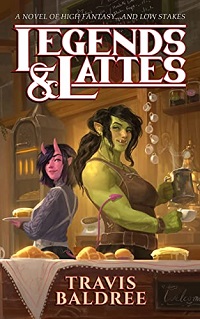
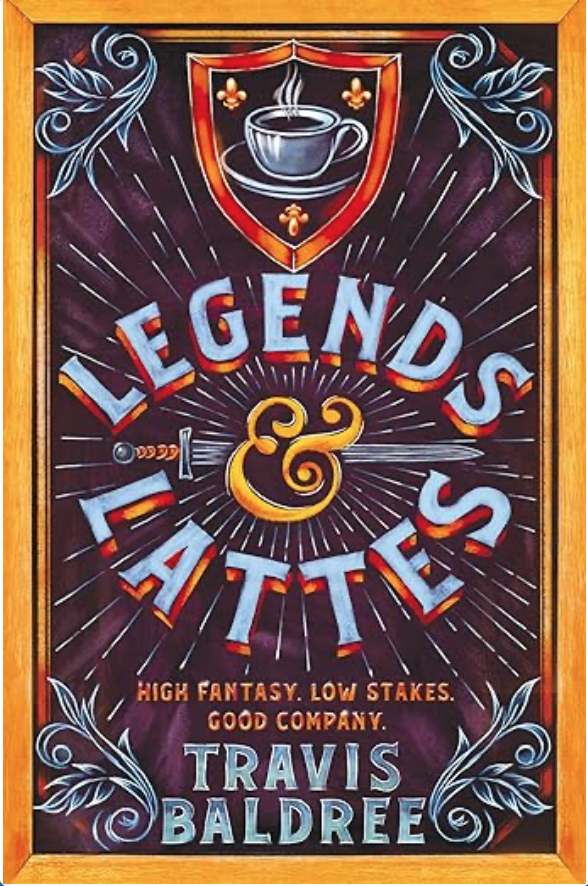
    My only criticism is that I would have like slightly stronger descriptions of the characters early on in the book, especially as I listened to the audiobook, which Baldree narrates, and so didn’t see the original cover art. In some ways it’s sad that Tor didn’t keep the Carson Lowmiller cover, although the cover blow does work better when viewed on a small device. It’s hard to get a clear picture of what characters look like when odd pieces of description are scattered throughout the first few chapters.

    Anyone up for a cup of milky bean water?

  • Under the Skin ~ Michael Faber

    Isserley seeks out well built male hitchhikers and incapacitates them. Her reasons for doing so are gradually uncovered and they are a lot more complex than they initially appear.

    Spoiler
    This is a novel that turns meat eating and the meat industry on its head.
    The men are being collected to be farmed and processed and sent off to an alien planet for consumption. As an ethical vegetarian I approve of what the book is trying to get people to think about, but I feel it could have been much better done and made more of an impact.

    What didn’t work for me was Isserley’s fatalism. I would have found it a much more enjoyable book if she’d actually acted upon what she learned and taken a stand, rather than drifting through life.
    The odd love triangle didn’t work for me either, Amlis wasn’t interested in her enough and Isserley wasn’t interested in Ensel enough.

  • The Buried Giant ~ Kazuo Ishiguro

    Beatrice and Axl are two elderly Britons who want to see their son before they are too old. Their search for him causes to discover much about themselves, their country and to meet other people, whose lives and purposes entwine with their own.

    They meet the aged Sir Gawain, nephew of King Arthur. He is a wonderfully polite, yet pugilistic character, swapping between the two from one sentence to the next. I found some of the conversations between him, Axl and Beatrice where they are all talking at cross purposes and none of them pay attention to the others, especially funny. I loved the supportive relationship between Axl and Beatrice.

    This book certainly made me think. There is more than one Buried Giant, but you need to look out for them and work out what they mean! It is written in a style that could almost be an oral storyteller recounting a tale, which fits in well with the period. There are occasions where the narrator addresses the audience, but it doesn’t occur too often, otherwise it would break the flow of the story. I think this was Ishiguro handled this element extremely well.

  • The Quality of Silence ~ Rosamund Lupton

    I found it hard to put this book down! It tells the story of Yasmin and her profoundly deaf ten year-old daughter Ruby who go on a perilous search for Ruby’s father in Northern Alaska during the winter. It’s a thriller that draws you into its icy web and I found myself holding my breath at points. It’s not just about their search, it has an environment message and it’s also about Yasmin and Ruby becoming closer as they deal with challenges and learn to rely in each other. Ruby’s parts are in first person and Yasmin’s are in third person. The tension builds up well thoughout the book as the stakes get higher and Yasmin and Ruby are fighting for their lives. The twists at the end are surprising and there are some touching bonding moments between mother and daughter.

    I loved the variety of ways that Ruby communicates: by signing, tweeting and using her computer. I learnt a lot about what it takes to survive in the Arctic night and the way people survived there in the past.

    My main dislike of the book was that Ruby is not a ten year-old, as her thoughts are far too complex for someone of that age. I think that Lupton should have made her a twelve year-old at least or made her language more simple. She tells us that Ruby is gifted and shows it by having her use the word onomatopoeic, but this is taught to all six-year olds at school! If it wasn’t mentioned so often that she was ten, it would have passed by, but for me it kept interrupting the flow of the narrative.

    I also found Yasmin’s negative attitude to her daughter using technology to communicate unrealistic, as parents of children with disabilities will use anything that helps their child make their way in life.